

HAYES GIN
AWARD-WINNING GIN ON THE COSTA DEL SOL
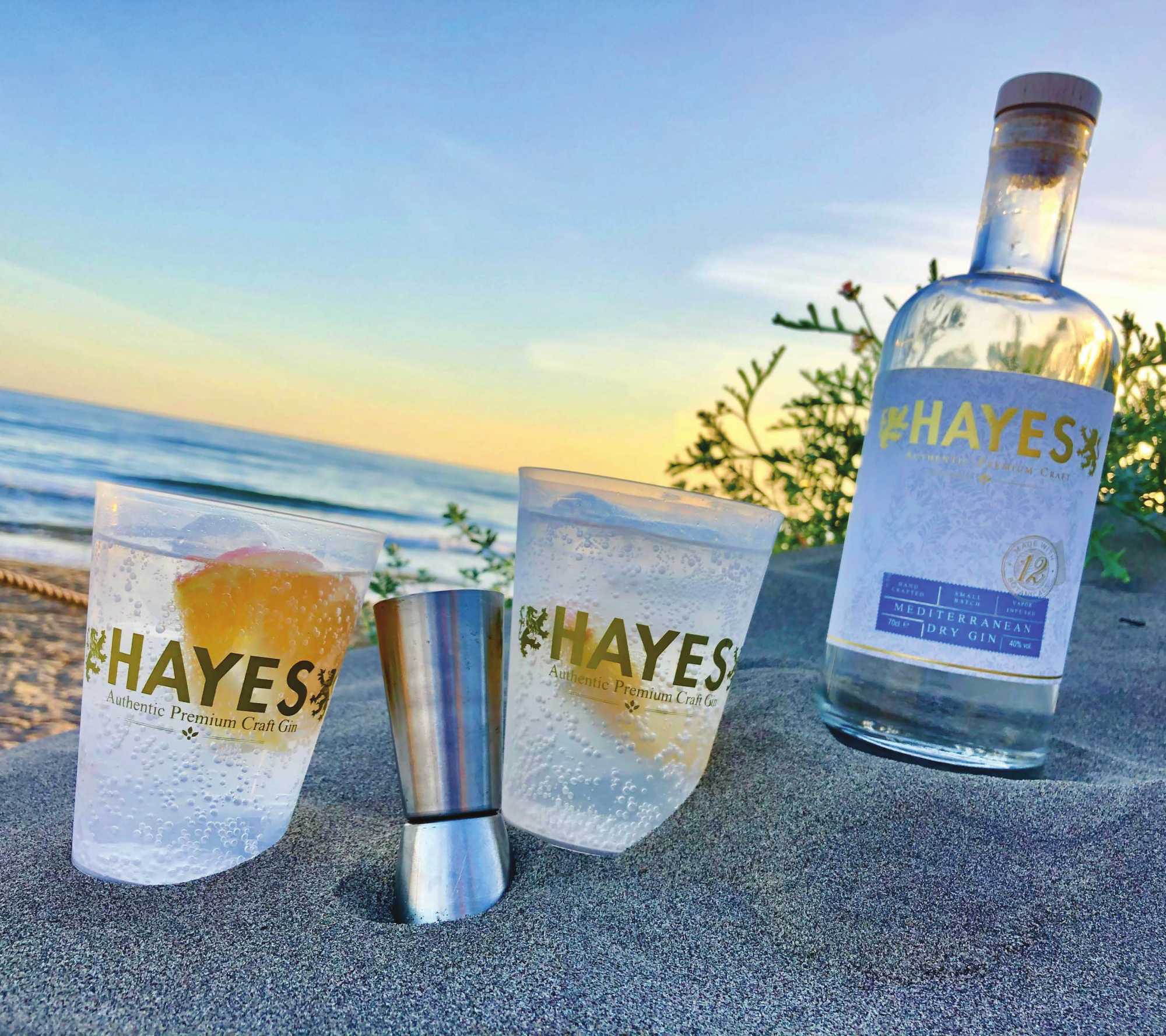
Gin is definitely having a gin-aissance, and everyone wants to enjoy this ju niper spirit. With so many to choose from, it’s quite a minefield to know which gin to go for when visiting a bar or restaurant. Gin is one of the most low calorie drinks to order in a bar, thanks to its juniper berries, as it is low in sugar and loaded with antioxidants, and also reduces bloating and will apparently stave off the wrinkles (it’s a win-win situation!). Hayes is a premium craft Spanish gin that is distilled in Madrid and is now dis tributed on the Costa del Sol – with all ingredients 100 per cent natural. Their recipes are created to give bold flavours that are encapsulated in the gin it self, meaning it is unnecessary to add flavour by means of a mixer. As a result, all that is needed is the full Hayes experience and a refreshing tonic with ice. As gin has become a popular favourite – with a growing number of people
now choosing gin as their favourite tipple in bars, restaurants and at home – Hayes has already positioned itself as the head of the premium gin industry and a household name. Their admirable and tenacious marketing strategy has earned them three prizes at the World Gin Awards. Hayes is already being enjoyed in the sun at beach bars and Marbella pool party venues, as well as in the many upstanding restaurants and bars across the Coast. If you are a lover of gin, you can contact them here on the Coast: Tel. (+34) 677 015 506 sales@hayesgin.com www.hayesgin.com
WHY WE NEED TO DO MORE STRENGTH TRAINING
BY RACHEL GARROD

When I was younger the gym didn’t really float my boat. I was active, as most healthy younger people are, but lifting weights was far from my preferred method of exercise. That was probably okay then, but unfortunately age related sarcopenia (involuntary loss of muscle mass) is something we can all experience, even if we remain active with walking. After the age of 30 (so young!) we lose around three to eight per cent of our muscle mass over a decade. More recent research suggests that, after the age of 35, unless we intentionally do resistance exercise, we can lose around five per cent of muscle mass per year. Simply walking or cycling is not enough to help prevent this age-related loss (unless we do a lot of it and include hills). This matters because strong muscles are essential for balance, to help prevent bone loss and to help keep the weight off. When muscles are strong they use oxygen more efficiently, putting less strain on your heart and your lungs. This improvement in efficiency goes some way to minimising the impact of ageing on our lungs. As muscles work they pull and tug on our bones, stimulating an increase in bone formation. Weight-bearing exercises with high impact like walking or jumping are also good for our bones, but strength training plays an often under-rated beneficial effect. Strong muscles (particularly the leg muscles) are also associated with improved balance and coordination, and many studies have shown reductions in the number of falls with strength training routines. Strength training also has anti-inflammatory
effects on the body, as working muscles release chemicals that effectively fight inflammation in our bodies. Strength training (also known as resistance training) doesn´t have to be in the gym, or even with weights. Pilates is considered a strength training activity, as are certain types of yoga and many calisthenic routines. These types of exercise all use the person’s own body weight as resistance. Think of a simple squat exercise where the leg muscles are lifting the weight of the body. One of the best all-round exercises requires no equipment other than a regular dining chair. From a sitting position, and without using your arms to help, stand up straight and tall and repeat as many times as you can. Whilst walking is a great form of aerobic exercise, adding in hills or even bursts of faster walking will help build strength. Understandably, as we age our exercise routine needs to be appropriate, particularly if there are comorbidities such as heart problems or joint pain. And that is where a physiotherapist can make the difference, so please get in touch if you would like help building strength.
Rachel Garrod (Ph.D. Physiotherapist) specialises in physiotherapy for older people with respiratory disease and other chronic illnesses. rachelgarrod1@gmail.com Tel. (+34) 699 501 190 www.betterbreathingphysio.com