

Nature & Life
Green-inspired evolution that maintains balance
By Alia Babapulle
As more and more eco-friendly products come onto the market, and people are consciously looking for ways to reduce the impact we humans have made in a negative way on our planet, it is very heartening to see exactly how much we can do.
Countries all over the world are uniting in the fight against waste, plastics and chemicals – just about anything you can think of which damages the place we live in – and taking care of the animals we share it with.
These include projects utilising solar power, of course, but also using insects which can eat plastics to clear landfills and machines to combat the vast amount of plastic rubbish floating in our oceans and hurting our fish, reducing air pollution, closing down chemical factories (or hitting them with horrendous fines), petitioning against drilling in pristine Arctic waters… each and every battle is slowly but surely won.
Brazil, one of the worst countries in the world with its policy of cutting down immense swathes of tropical forest, did (in 2009) reduce nearly 90 per cent of deforestation with the result that forests are returning. Shell have pulled out of the Arctic as petitions have made their impact, and now pristine places there will be kept… pristine.
All these factors – and the work designers do using natural and innovative products which do not harm our lives – represent a huge step forward. I look forward all the time to seeing what I can find.
Reducing Smog in The Netherlands
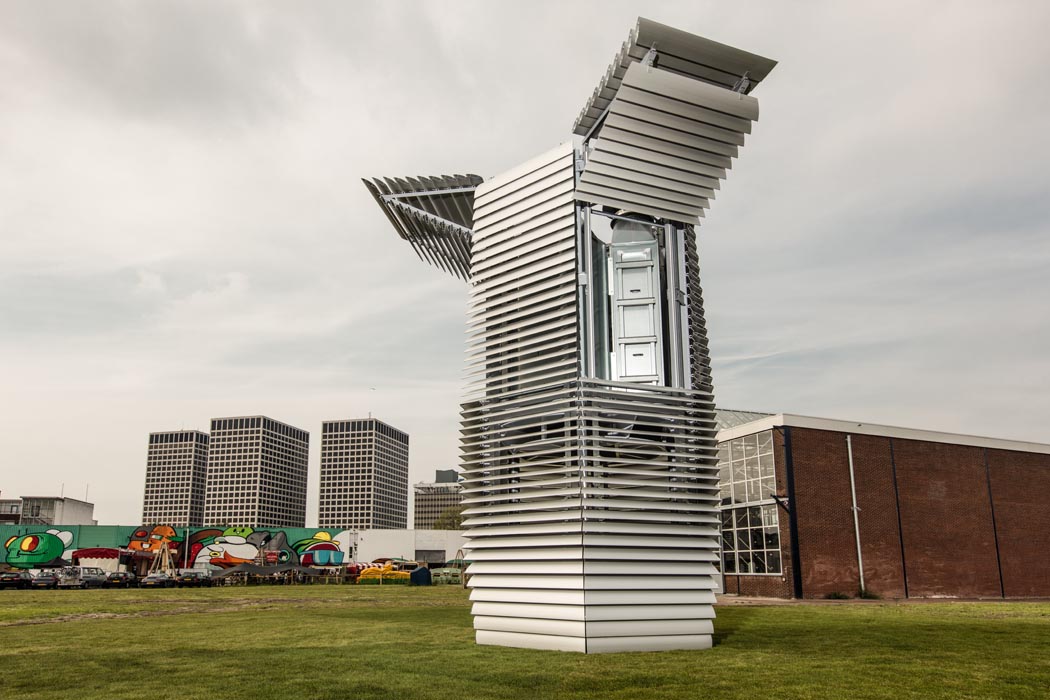
In Rotterdam this September, Studio Roosegaarde launched the Smog Free Project. It has been hailed as the world’s largest vacuum cleaner, and it uses a technique patented by Studio Roosegaarde.
In certain towns and cities, the vast amount of air pollution we humans produce, through cars, machines, etc., is extremely visible. To get rid of it, ion technology produces smog-free bubbles of public space, allowing people to breathe and experience clean air.
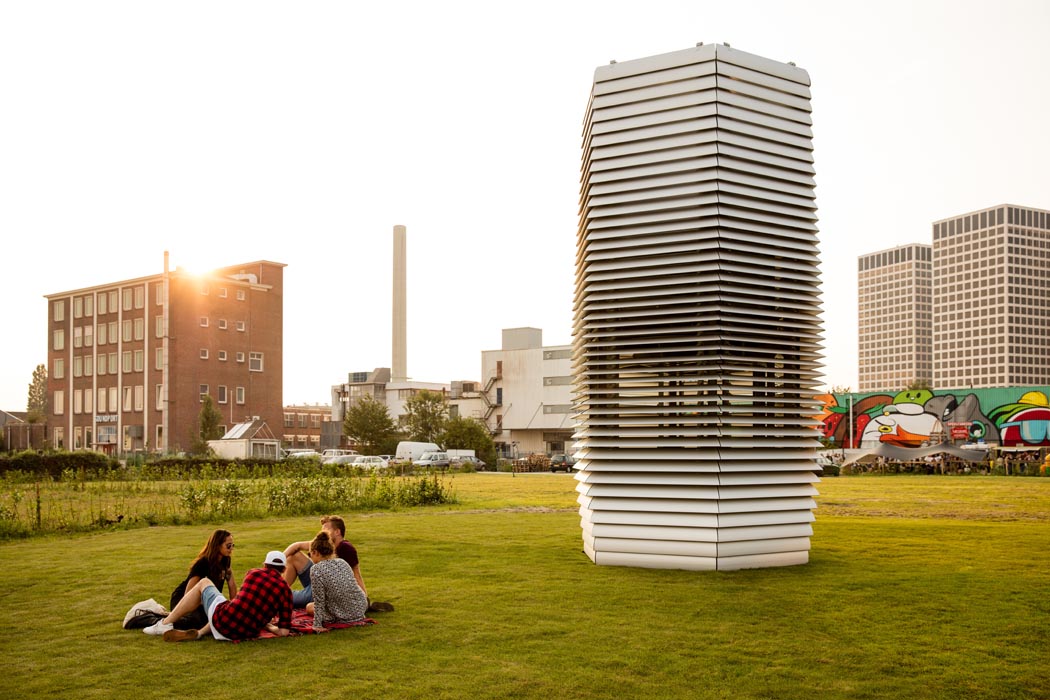
The tower cleans 30,000 cubic metres of air per hour of ultra fine smog, uses no more electricity than a water boiler and runs on green energy. Not only is this an immediate solution for creating clean parks but it is also a sensory experience of a clean future; people can become a part of the solution instead of being the problem.
As a souvenir, the studio has created jewellery made from the collected smog particles. By sharing the Smog Free jewellery, a supporter donates 1,000 cubic metres of clean air to the city. After the launch in Rotterdam, the Smog Free Project is set to travel the world. www.studioroosegaarde.net
Sculptural Innovation in South Korea
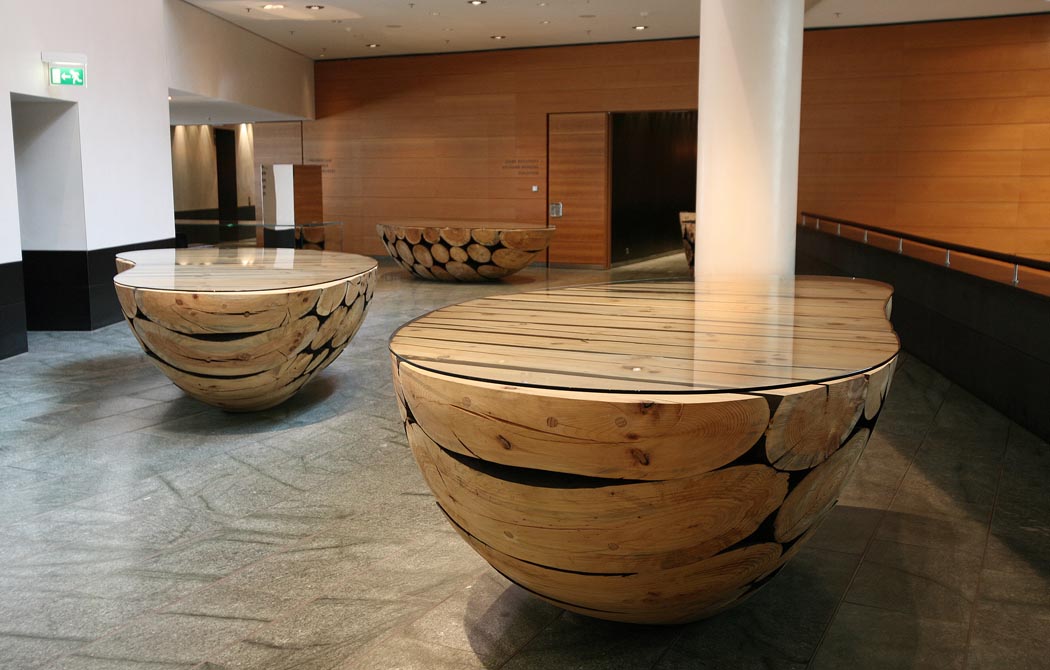
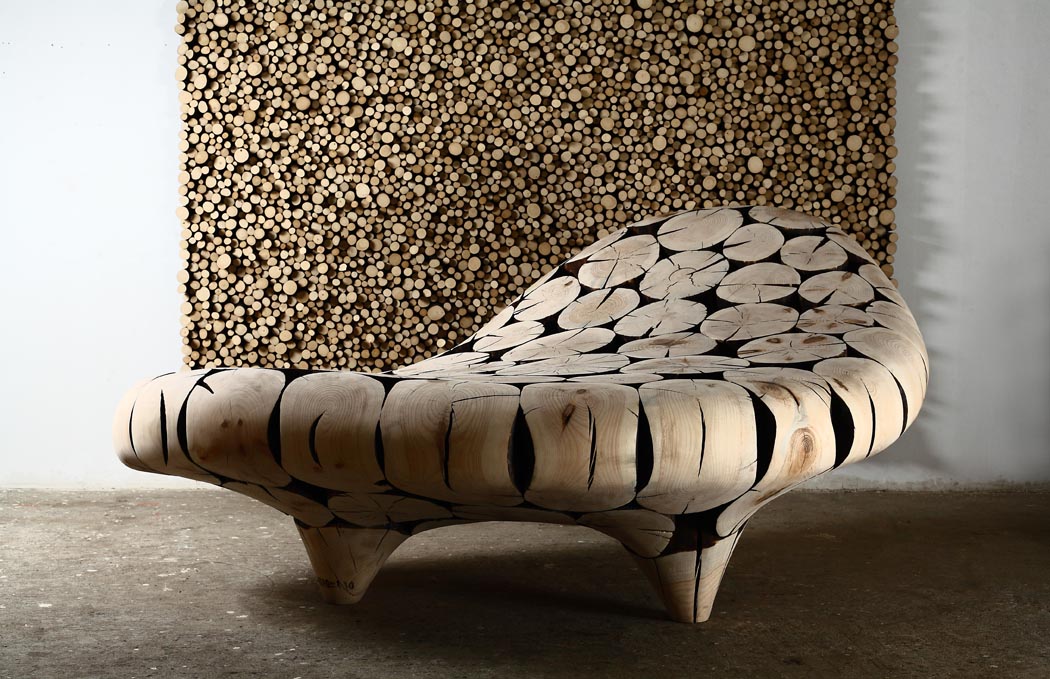
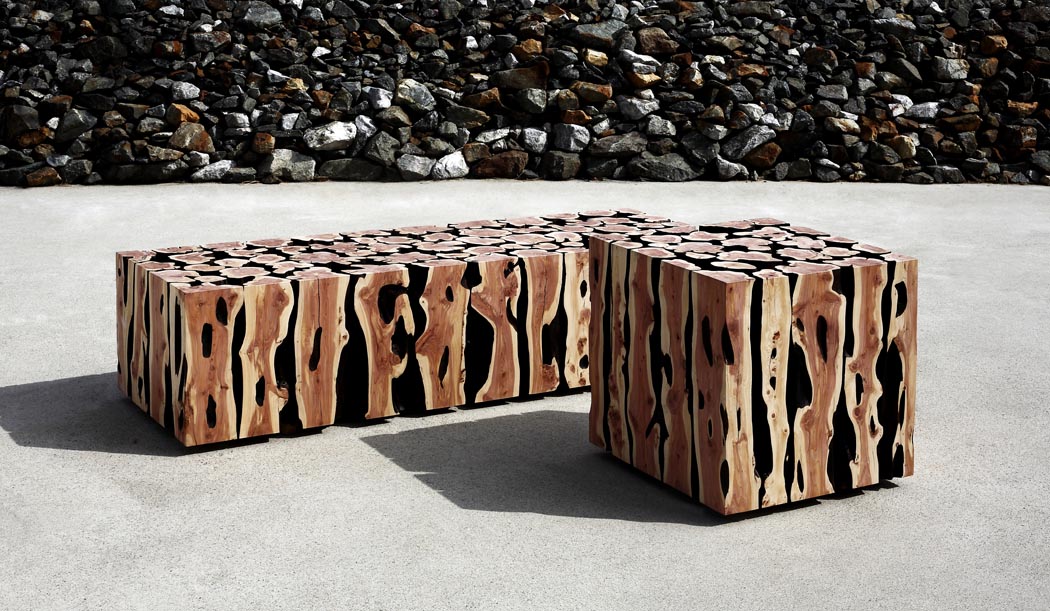
Korean artist Jaehyo Lee shows his respect for natural raw materials and a very innovative approach in displaying their characteristics. His “Transformations” series uses a mesh of logs and bent nails, which form cross sections that reveal the structure of the materials within.
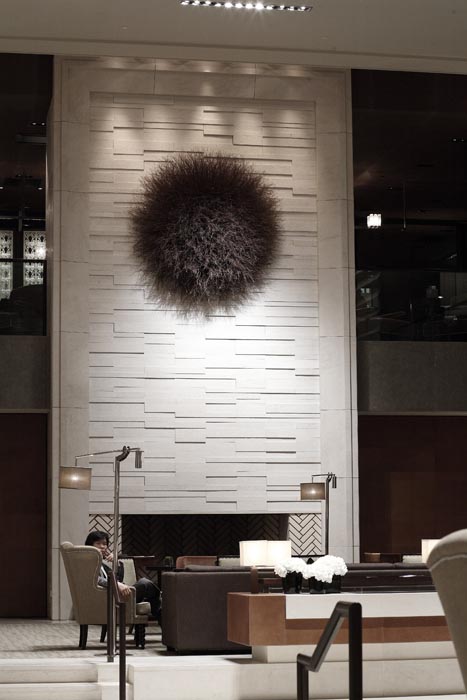
His sculptural works always incorporated natural elements on a grand scale, from the icicle sculptures he grew using hanging threads to arrays of dangling rocks suspended in mid-air – seen in his studio in Yangpyeong. However, it is his sculptural furniture using cross-sectional wood which has attracted worldwide attention.
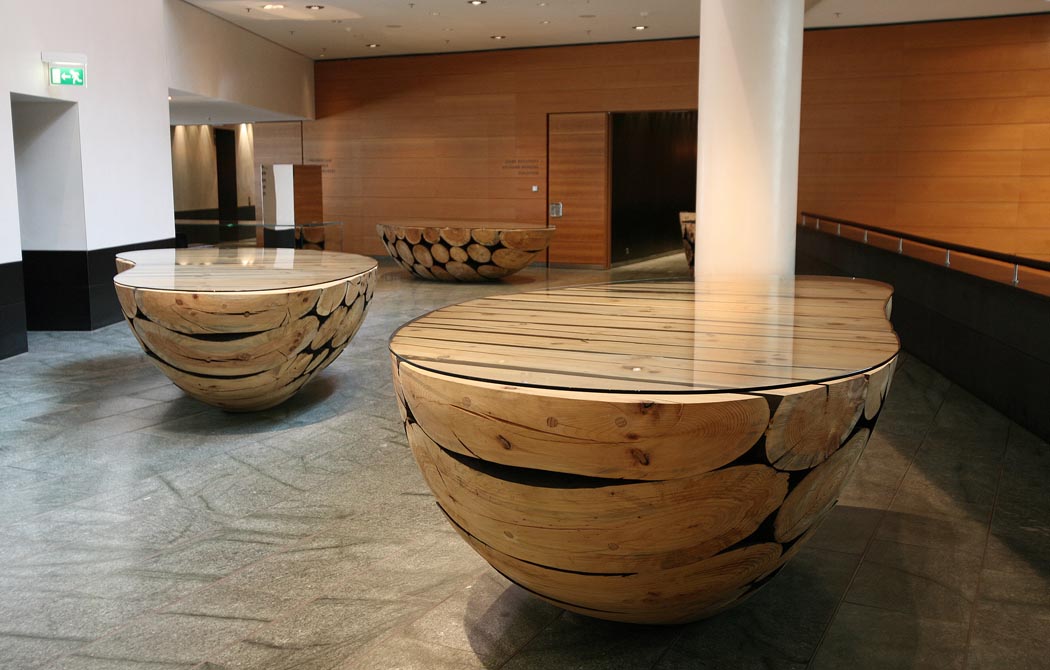
Some of his wooden sculptures appear as though the spaces between the trunks have been filled with a black substance, but this is due to the effects of charring and shadows. To apply a finishing touch to his wood and nails sculptures, Lee first burns the materials and then sands down the exposed faces to create highly contrasting colours. It works beautifully, giving a depth and softness to something as mundane as wood or nails.www.leeart.name

